Listeners often imagine an international jazz circuit in which the same quartet flies from Rhode Island to Lake Geneva to Rotterdam, repeating an identical set under interchangeable banners. In practice, every major gathering carries the imprint of the town and era that founded it.
Open-Air Lawns, Fjords and Summer Light
Modern jazz festival history begins in earnest at the Newport Jazz Festival in July 1954, organized by Boston club proprietor George Wein with the patronage of Elaine and Louis Lorillard. By moving jazz out of midnight basements and onto Rhode Island’s coastal grounds—later anchored at Fort Adams State Park—Newport proved that improvised music could command daytime civic audiences across generations. As Wein later recounted in Myself Among Others, that shift immediately altered repertoire pacing: ensembles projected wider brass dynamics across salt air while soloists balanced ballad intimacy against harbour acoustics.
When European enthusiasts adopted the festival idea during the 1960s, they did not simply clone Newport. On Norway’s west coast, Moldejazz launched in 1961 and grew into a town-wide ritual weaving between the harbourfront, civic street parades and concert halls such as Bjørnsonhuset. Across the Gulf of Bothnia in western Finland, Pori Jazz began in 1966 on Kirjurinluoto, a river island parkland where midsummer twilight barely darkens before midnight. Both Nordic gatherings show how outdoor summer festivals thrive when anchored by smaller indoor rooms—giving listeners a refuge for quiet chamber trios whenever coastal weather shifts.
The Lakefront, the Medieval Hilltop and the Mega-Hall
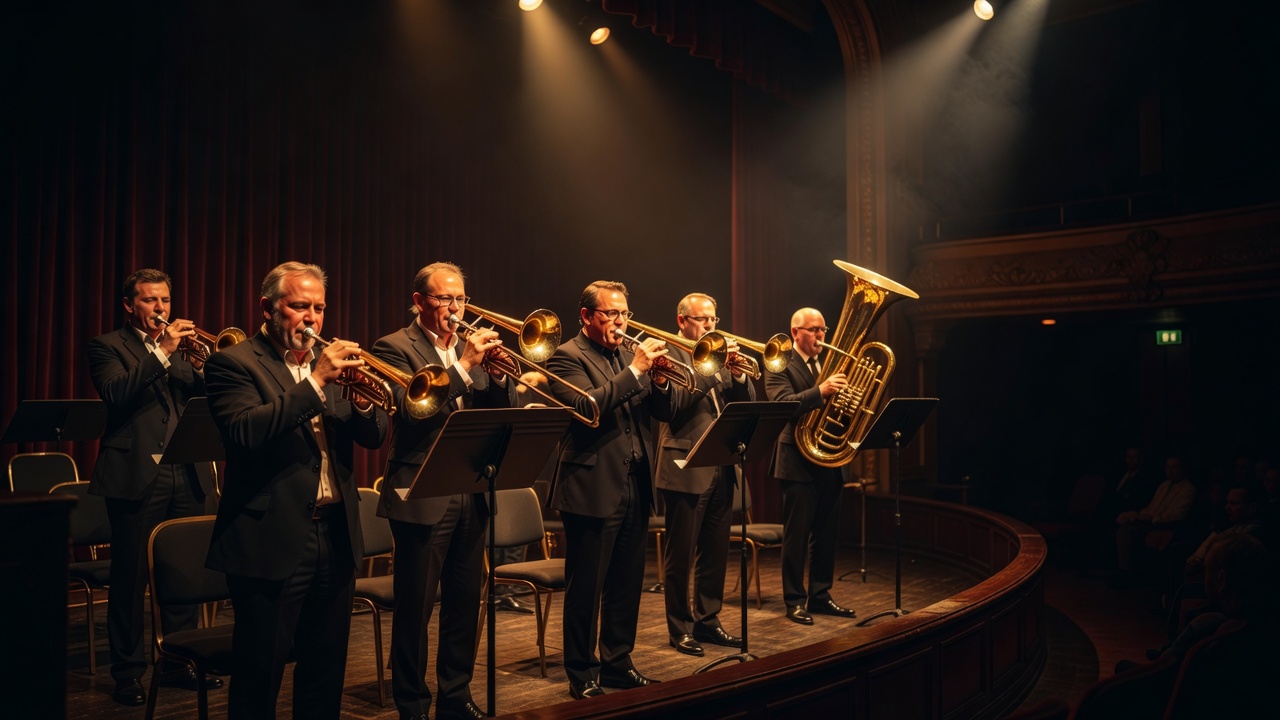
By the late 1960s and 1970s, three contrasting continental archetypes had crystallized. On Lake Geneva in Switzerland, Claude Nobs founded the Montreux Jazz Festival in 1967, forging a reputation for broadcast-grade recording fidelity inside spaces like the Auditorium Stravinski and encouraging cross-genre encounters alongside straight-ahead jazz. The Montreux audiovisual archive—later inscribed in UNESCO’s Memory of the World Register—demonstrates how technical ambition can turn a lakeside resort into a permanent historical document.
In central Italy, Umbria Jazz (founded 1973 in Perugia) embedded concerts inside stone piazzas, medieval cloisters and the baroque Teatro Morlacchi alongside evening bills at Arena Santa Giuliana. Walking five minutes from an unamplified piano recital beneath frescoed boxes to a brass band marching down Corso Vannucci produces a civic continuity rarely matched in modern exhibition parks. Meanwhile, rural southwestern France birthed Jazz in Marciac in 1978, transforming a bastide village of roughly twelve hundred residents into a summer sanctuary anchored by a vast acoustic tent and an adjacent year-round concert hall.
At the opposite end of architectural scale sits the North Sea Jazz Festival, established in The Hague in 1976 by Paul Acket before relocating to Rotterdam Ahoy in 2006. Here, more than a dozen indoor halls operate simultaneously beneath one climate-controlled roof. Listeners move from an arena big-band gala to a hushed wooden-floor quartet room in less than four minutes. A comparable urban density defines Festival International de Jazz de Montréal—where closed downtown boulevards pair free outdoor concerts with ticketed theatre cycles—and the Cape Town International Jazz Festival in South Africa, whose multi-stage convention layout links South African township jazz, Cape jazz traditions and visiting international headliners.
Autumn Clubs, East Asian Halls and Curated Risk
Once September cools the Northern Hemisphere, the character of the international circuit shifts decisively indoors. Autumn festivals tend to shrink audience capacity per room while widening artistic risk. Jazzfest Berlin, tracing its lineage to 1964 and hosted around Haus der Berliner Festspiele and partner venues, frequently builds editions around commissioned dialogues, historical reckonings and experimental improvisation. In Finland, Tampere Jazz Happening turns the former customs house at Tullikamari into an intensive four-day laboratory for avant-garde European, African and North American ensembles.
Across the North Sea, the EFG London Jazz Festival links flagship concert stages such as Barbican Hall and Wigmore Hall with historic basement clubs including Ronnie Scott’s and contemporary East London rooms, reflecting the city’s interwoven diaspora rhythms. Further east, the Tokyo Jazz Festival and Japan’s dense year-round network of listening clubs—anchored by Shinjuku Pit Inn and Blue Note Tokyo—illustrate a culture of extraordinary technical attentiveness, where international touring bands routinely schedule bespoke acoustic sets alongside large-hall appearances. Even older regional institutions like Antwerp’s Jazz Middelheim and Norway’s Kongsberg Jazzfestival maintain devoted local followings precisely because they protect a distinct identity rather than chasing uniform global pop line-ups.
Reading the Circuit as an Ecosystem
Viewed together, these festivals form an interdependent touring ecology rather than rivals competing for a single crown. A mid-career quartet might premiere a commissioned suite at Jazzfest Berlin in November, refine it across Nordic club dates in Oslo and Stockholm during winter, record it in spring, and present its matured form on an afternoon park stage at Pori or Molde the following July. Recognizing where a festival sits in that seasonal rhythm helps listeners understand not only who is on the bill, but why the music sounds the way it does in that particular room.
| Festival Archetype | Representative Examples | Typical Acoustic Setting | Listener Rhythm |
|---|---|---|---|
| Coastal & Parkland Summer | Newport Jazz Festival, Pori Jazz, Moldejazz | Open lawns, harbour tents, paired municipal halls | Daytime outdoor sets shifting to late-night indoor clubs |
| Historic Civic & Village | Umbria Jazz, Jazz in Marciac, Kongsberg Jazzfestival | Piazzas, baroque theatres, churches, village marquees | Walkable immersion linking midday recitals and evening concerts |
| Multi-Hall Convention Hub | North Sea Jazz, Cape Town International Jazz Festival | Multiple sound-isolated indoor rooms in one complex | High-density sampling across overlapping schedules |
| Autumn Curatorial & Club | Jazzfest Berlin, Tampere Jazz Happening, EFG London Jazz Festival | Seated concert halls, former industrial halls, basement clubs | Focused thematic evenings with commissioned premieres |